Preparing for CO2 Laser Resurfacing: Pre-Care, Recovery Timelines, and Aftercare
Achieving optimal aesthetic outcomes from fractional CO2 laser resurfacing depends as much on diligent pre-treatment preparation and meticulous post-procedure aftercare as it does on laser parameter execution. Because CO2 laser energy creates microscopic ablative channels in the skin, the epidermis undergoes a structured, predictable biological healing sequence. Understanding this recovery pathway empowers patients to plan their schedules comfortably, follow necessary hygiene and barrier repair protocols, and protect their newly regenerating skin. At Din Style Aesthetics in Palm Springs, Florida, every CO2 laser patient receives comprehensive written instructions, specialized post-procedure topical formulations, and direct clinical follow-up throughout their recovery journey. Patients who understand the timeline in advance tend to report a smoother, less stressful recovery and better adherence to the protective measures that preserve the quality of the result. This guide explains what to expect at each stage so patients can plan their personal and professional commitments around the procedure with confidence.
Pre-Treatment Skin Conditioning: 2 to 4 Weeks Before Laser
Proper preparation sets the foundation for safe, rapid re-epithelialization and minimizes the risk of post-inflammatory hyperpigmentation (PIH). Beginning 2 to 4 weeks prior to your scheduled CO2 laser procedure at Din Style Aesthetics, your clinician may recommend a tailored skin-conditioning regime. For patients with higher melanin activity (Fitzpatrick skin types III and IV), topical tyrosinase inhibitors—such as hydroquinone, kojic acid, or azelaic acid—are prescribed to suppress melanocyte hyperactivity before thermal energy is introduced. All patients are advised to stop active topical retinoids (retinol, tretinoin), glycolic acids, and harsh exfoliants 7 to 10 days prior to treatment. Strict broad-spectrum SPF 50+ sunscreen use and avoidance of active tanning or sunbeds for at least 4 weeks prior is strictly required, as tanned skin dramatically increases thermal absorption risks. These measures are not optional refinements; they are integral to the safety profile of the procedure and to the quality of the eventual result. Patients who arrive for treatment with properly conditioned skin tend to heal faster and with fewer complications than those who do not complete the pre-treatment regimen.
Day of Treatment: Clinical Comfort Protocols and Procedure Overview
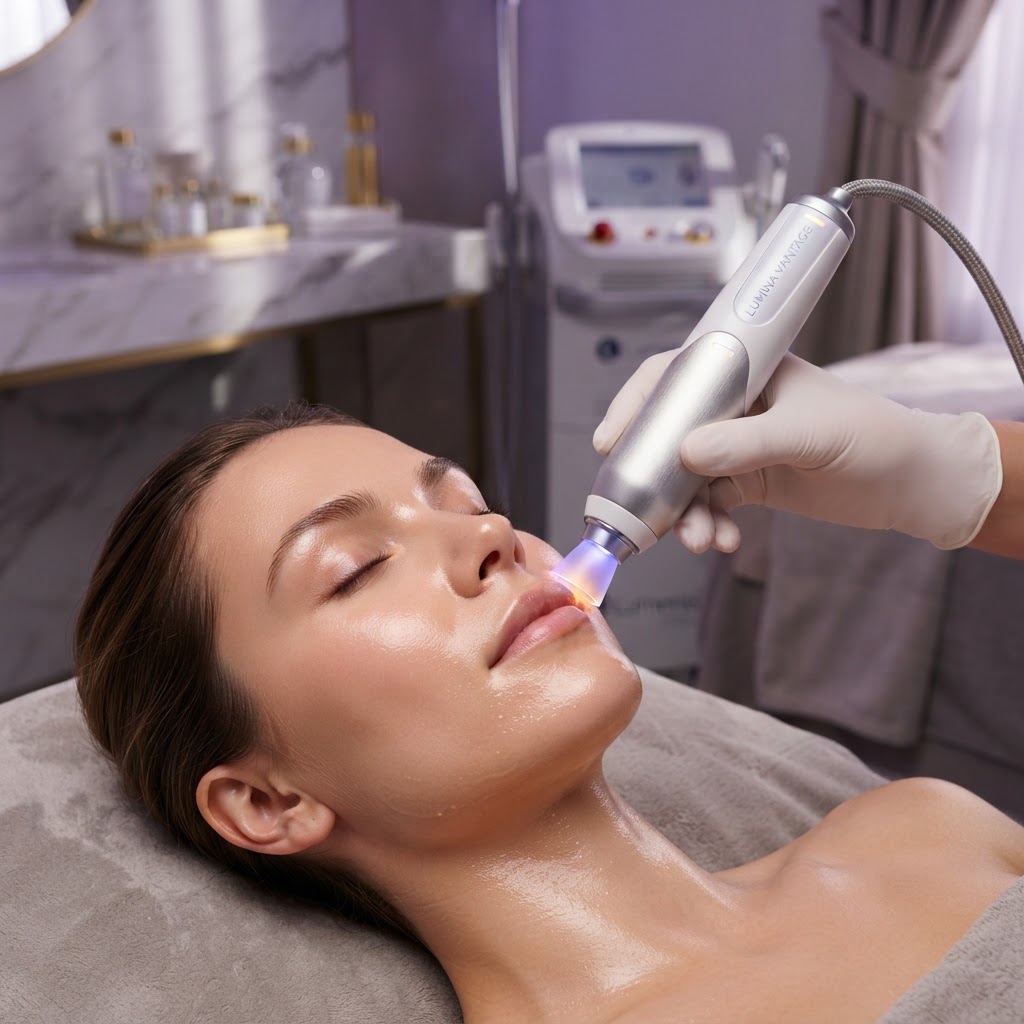
On the day of your CO2 laser resurfacing session in Palm Springs, your safety and comfort are paramount. The treatment area is thoroughly cleansed with an antiseptic solution, and high-strength topical numbing cream (compounded lidocaine/tetracaine) is applied for 45 to 60 minutes prior to procedure commencement. Prophylactic oral antiviral medication (such as valacyclovir) is confirmed. During the laser session, cold forced-air cooling devices (such as Zimmer chillers) direct chilled air across the skin surface to minimize thermal discomfort. The treating clinician systematically glides or stamps the laser handpiece across designated facial zones, delivering precise computerized fractional micro-spots. Total laser delivery time typically ranges from 20 to 45 minutes depending on treatment area size and depth parameters. Immediately post-treatment, a soothing occlusive barrier ointment is applied. Patients should arrange for a companion to accompany them home, as the numbing cream and the intensity of the procedure can make driving uncomfortable for some. The clinician provides a detailed verbal and written summary of the first 24 hours of care before the patient leaves the office.
Day-by-Day Recovery Timeline: What to Expect During Healing
The post-laser recovery sequence follows a predictable biological pattern. Days 1–2 (Acute Inflammatory Phase): Skin feels warm, similar to a moderate sunburn, accompanied by pinpoint erythema and mild-to-moderate edema (swelling), particularly around the eyes. Serous exudate may occur as micro-channels begin closing. Occlusive barrier ointments must be applied continuously to keep tissue moist. Days 3–4 (Desquamation & Bronzing Phase): Skin transitions to a grid-like brownish/bronzed appearance as microscopic epidermal necrotic debris sloughs off. Tightness and mild itching are common; gentle cool compresses provide relief. Days 5–7 (Re-epithelialization Phase): Fresh, pink, newly formed skin reveals itself beneath peeling areas. Edema resolves significantly. Patients can transition from heavy occlusive ointments to gentle hydrating serums and non-comedogenic moisturizers, and light mineral makeup can typically be applied. Weeks 2–4 (Maturation Phase): Erythema gradually fades from bright pink to a healthy, subtle glow. Neocollagenesis continues actively in the reticular dermis. Patients are encouraged to view this timeline as a guide rather than a guarantee; individual healing rates vary based on age, treatment depth, skin type, and adherence to aftercare. The Palm Springs team schedules a follow-up check at the appropriate interval to confirm healing is progressing as expected and to address any questions that arise during recovery.
Essential Aftercare Rules for Optimal Skin Protection
Adhering to strict post-laser aftercare instructions is essential to protect healing tissue, prevent secondary infection, and achieve superior cosmetic results. Rule 1: Maintain a Moist Environment. Moist wound healing accelerates re-epithelialization by up to 50% compared to dry scab formation. Apply prescribed occlusive ointments continuously for the first 4 to 5 days. Rule 2: Gentle Hygiene Only. Cleanse the face twice daily using lukewarm water and dilute vinegar washes or ultra-gentle, non-soap cleansers. Pat dry gently with clean gauze; never rub. Rule 3: Absolute Sun Avoidance. Healing skin lacks protective stratum corneum barrier pigment. Direct sun exposure during the first 4 to 6 weeks dramatically increases hyperpigmentation risk. Wear broad-brimmed hats outdoors and apply mineral zinc-oxide SPF 50+ daily starting on Day 5. Rule 4: Do Not Pick or Exfoliate. Allow peeling skin to shed naturally to prevent scarring. These rules are straightforward but demanding, and their consistent application is the single greatest determinant of how well the skin heals and how durable the result proves to be. Patients who are uncertain about any aspect of the aftercare should contact the Palm Springs clinic promptly rather than improvising, since early guidance can prevent small issues from becoming larger problems.
Post-Procedure Skincare Products to Use and Avoid
During the post-laser recovery window, the compromised epidermal barrier absorbs active ingredients with heightened intensity, making product selection critical. Recommended Products (Days 1–7): Pure petrolatum or medical-grade occlusive ointments, sterile saline or dilute acetic acid (vinegar) cool soaks, hyaluronic acid hydration serums, and physical (mineral) sunscreens containing zinc oxide or titanium dioxide. Products to Strictly Avoid (Weeks 1–4): Active AHA/BHA hydroxy acids, topical retinoids (retinol, tretinoin), vitamin C (L-ascorbic acid) serums during early raw healing stages, harsh alcohol-based toners, synthetic fragrances, physical facial scrubs, and heavy comedogenic oils. At Din Style Aesthetics, your clinician provides a curated post-treatment skincare kit complete with approved formulations, eliminating guesswork during your healing journey. The general principle is that the skin should be kept simple, supported, and protected during the early healing phase; active ingredient reintroduction is staged gradually as the barrier recovers, typically beginning around the third or fourth week depending on treatment depth and individual healing pace. Patients should not introduce new products on their own during the recovery window and should confirm with the clinic before resuming any active skincare regimen.
Recognizing Normal Healing Versus Concerns to Report
Understanding the boundary between expected healing and signs that warrant a call to the clinic helps patients recover with confidence rather than anxiety. Expected responses during the first week include warmth, mild to moderate redness, swelling (especially around the eyes), bronzing, grid-pattern peeling, mild tightness, and low-grade itching as the skin re-epithelializes. These are normal and typically resolve on schedule with proper aftercare. Concerns to report promptly include spreading or increasing rather than improving redness, pain that is severe or worsening rather than manageable, any sign of pustule formation or honey-colored crusting suggesting infection, areas of skin that remain raw or weeping beyond the expected window, and any unusual or spreading pigmentation changes. Din Style Aesthetics provides a direct contact pathway for post-procedure questions, and patients are encouraged to call the Palm Springs office at (561) 785-5811 with any concern rather than waiting. Early evaluation of a genuine concern can prevent a minor issue from affecting the final result, while reassurance about normal healing reduces unnecessary stress during an already demanding recovery period.
Who Is Prepared for the Fractional CO2 Healing Process?
Ideal patients for CO2 laser resurfacing are individuals who understand that micro-ablative skin renewal requires a temporary, planned pause from active social and outdoor commitments. Patients who are diligent about applying recommended occlusive ointments, avoiding direct sun exposure, refraining from picking or peeling desquamating skin, and maintaining clean hygiene practices achieve the smoothest, most uncomplicated healing progression. During your pre-treatment consultation in Palm Springs, we review your daily routine to ensure your post-laser calendar is properly structured. Candidates who can realistically commit to the protective measures—wearing daily mineral sunscreen, avoiding vigorous exercise for the prescribed window, and keeping the skin continuously moisturized with the recommended ointments—tend to heal most predictably and achieve the best cosmetic outcomes. The treating provider assesses not only the skin itself but also the patient's lifestyle and willingness to follow the aftercare plan, since these factors materially influence healing.
Precautions and Protocol Modifications for Sensitive Healing Responses
Patients with a history of recurrent oral cold sores (herpes simplex virus) must complete prophylactic antiviral medication prior to treatment. Individuals with active inflammatory skin conditions, ongoing occupational sun exposure that cannot be avoided, or inability to apply post-laser barrier ointments require specialized protocol adjustments or alternative non-ablative modalities like Sofwave or Stellar M22 IPL. A patient who cannot realistically arrange for the recommended recovery environment—time away from intense sun, ability to avoid strenuous activity, and a clean setting for wound care—may be advised to postpone until circumstances permit a proper recovery. The consultation is the appropriate moment to surface these factors so the plan can be adjusted or rescheduled before any procedure is performed.
Frequently Asked Questions
How many days off work should I plan for fractional CO2 laser recovery?
Most patients plan for 5 to 7 days of social downtime. By Day 5 or 6, surface peeling is largely complete, erythema has softened to a mild pink tone, and light mineral makeup can be worn to resume normal work and daily activities.
When can I resume regular exercise after CO2 laser resurfacing?
Vigorous physical exercise, hot showers, saunas, and swimming pools should be avoided for 7 to 10 days post-procedure. Sweat and elevated body heat can exacerbate erythema, swelling, and thermal irritation during early epidermal healing.
What should I do if I notice severe swelling or extreme redness?
Mild to moderate edema and redness are normal expected responses. However, if you experience sudden intense pain, pustule formation, or excessive swelling, contact our Palm Springs team immediately at (561) 785-5811 for prompt clinical evaluation.
How do I receive aftercare guidance for my CO2 laser session in Palm Springs?
Detailed written and verbal instructions, along with your clinical post-care kit, are provided during your pre-treatment consultation and reviewed immediately following your procedure at Din Style Aesthetics.
Sources and Medical Information
This article is educational and does not replace an individualized medical consultation at our Palm Springs clinic.
Begin Your Consultation at Din Style
We offer personalized evaluations for every treatment at our Palm Springs, Florida clinic. Speak with our team today.
Request a Consultation
Personalized evaluation with our treating providers in Palm Springs.